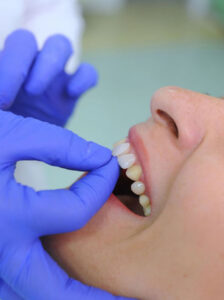
There is no single amount of visible gum that determines whether a smile is attractive. Some people naturally show more gum when they smile and like the way it looks. Others feel that prominent or uneven gum display draws attention away from their teeth or changes the proportions of their smile.
In cosmetic dentistry, the relationship between the teeth, gums, lips, and face is considered as a whole. What patients often call a “gummy smile,” or excessive gingival display, can have several different causes, including the position of the gum tissue, upper-lip movement, tooth proportions, and jaw structure.
At West Hills Smiles, the first step is determining why more gum shows when you smile. That distinction matters because reshaping gum tissue will not correct a problem caused primarily by lip movement or jaw position, just as moving the teeth will not necessarily correct excess gum tissue.
Is a Gummy Smile Attractive? Understanding Smile Proportions
Attractiveness is subjective. A smile that one person wants to change may be a feature another person would never consider a problem.
Dental research has nevertheless examined how different amounts of visible gum affect perceptions of smile attractiveness. In general, studies suggest that relatively small amounts of gingival display tend to receive favorable aesthetic ratings, but there is no universal cutoff at which a smile suddenly becomes unattractive.
Cosmetic dentists therefore use measurements as clinical reference points, not rules for deciding whether someone’s smile looks good.
Lip position, tooth length and shape, gum symmetry, facial proportions, and the way these features interact all influence how a smile appears.
Is There a “2-Millimeter Rule” in Dental Aesthetics?
You may see 1 to 2 millimeters of visible gum described as an aesthetic reference point for a full smile. Research comparing different smile photographs has found that relatively modest gingival display is often rated favorably.
That does not mean showing more than 2 millimeters of gum automatically requires treatment.
Some patients naturally show more gum and have a balanced smile. Cosmetic treatment becomes relevant when you are unhappy with the amount of gum showing or when a dental evaluation identifies an underlying issue that should be addressed.
Also Read: 4 Most Popular Cosmetic Dentistry Procedures
What Causes a Gummy Smile?
This is where gummy-smile treatment becomes more individualized.
Two patients can show a similar amount of gum but have completely different reasons for it. In some cases, the gum tissue covers more of the natural tooth than expected. In others, the upper lip moves higher during smiling, the teeth appear short or worn, or the upper jaw contributes to the amount of gum visible.
Sometimes more than one factor is involved.
Altered Passive Eruption
As permanent teeth erupt and mature, the gum tissue normally settles into a position that exposes the appropriate amount of the clinical crown, or visible portion of the tooth.
With altered passive eruption, the gum margin remains positioned farther over the tooth than expected. The teeth can therefore appear unusually short or square even though more natural tooth structure is present beneath the gum tissue.
A dental examination can help determine whether excess gingival coverage is contributing to the appearance of a gummy smile and whether gum contouring or another periodontal approach may be appropriate.
Hyperactive Upper Lip
Sometimes the gums and teeth are normally proportioned, but the upper lip moves farther upward than usual during a full smile.
Muscles that elevate the upper lip contribute to this movement. When lip elevation is pronounced, more gum becomes visible even though there may be nothing unusual about the gum tissue itself.
Because the cause involves lip movement rather than excess gum covering the teeth, treatment options are different from those used for altered passive eruption.
Vertical Maxillary Excess
Vertical maxillary excess, or VME, is related to the skeletal proportions of the upper jaw. Increased vertical development of the maxilla can contribute to greater gingival display and may also affect overall facial proportions.
Because this is primarily a skeletal issue, simply removing gum tissue may not address the underlying cause.
Treatment depends on severity and the patient’s anatomy and may require evaluation involving orthodontic or surgical specialists. This is one reason identifying the source of excessive gingival display before cosmetic treatment is so important.
Short, Small, or Worn Teeth
Sometimes the gums only appear excessive because the visible teeth are relatively short.
Bruxism, or chronic grinding and clenching, can gradually wear the biting edges of the front teeth. Naturally small teeth can create a similar imbalance between visible tooth structure and surrounding gum tissue.
In these situations, the cosmetic plan may need to address tooth proportions rather than simply removing gum tissue.
Also Read: Smile Makeover in West Hills, CA
Which Gummy Smile Treatment Is Right for Which Cause?
There isn’t one procedure that fixes every gummy smile.
A useful way to think about treatment is to match the approach to the feature responsible for the extra gingival display:
| Possible Cause | What You May Notice | Treatment That May Be Considered |
|---|---|---|
| Excess gum coverage or altered passive eruption | Teeth appear short or square despite normal underlying tooth structure | Gum contouring or other periodontal treatment |
| Excessive upper-lip elevation | Gum display increases substantially with a full smile | Neurotoxin treatment in appropriately selected patients or other lip-related treatment |
| Short or worn teeth | Teeth look disproportionately short compared with the gums | Restorative treatment such as veneers when clinically appropriate, sometimes combined with gum contouring |
| Tooth-position or bite-related factors | Tooth position contributes to smile proportions | Orthodontic treatment in selected cases |
| Vertical maxillary excess | Significant gum display associated with skeletal/facial proportions | Orthodontic and/or surgical evaluation depending on severity |
The important point isn’t choosing a procedure from a list. It is identifying which tissue or structure is actually responsible before changing it.
How to Fix a Gummy Smile: Treatment Options at West Hills Smiles
Patients often come in wanting to know whether correcting a gummy smile requires surgery. In many cases, it does not.
The appropriate treatment depends on the cause, the amount of correction desired, the health of the teeth and gums, and the patient’s overall smile goals.
How Does Laser Gum Contouring Work?
When excess gum tissue contributes to short-looking or uneven teeth, laser gum contouring may be an option.
A dental laser can be used to carefully reshape the gum line and expose more of the natural tooth structure. Laser technology can also help control bleeding during treatment.
The amount of tissue that can safely be reshaped depends on the relationship between the gums, teeth, and underlying bone. That is why the evaluation comes before deciding how much contouring should be performed.
For appropriately selected patients, changing the gum line can create a more balanced relationship between the visible teeth and surrounding tissue. Healing and long-term stability vary according to the procedure performed and the patient’s individual anatomy and oral health.
Why Might Gum Contouring Be Combined With Porcelain Veneers?
Gum contouring changes the gum line. It does not make a worn or naturally small tooth longer.
If both the gum position and tooth proportions contribute to the appearance of the smile, addressing only one may leave the overall proportions unchanged.
In selected cases, gum contouring can establish a more balanced gingival line while porcelain veneers are used to change the visible shape, length, color, or proportions of the teeth.
Treatment planning should consider both together when appropriate rather than treating the gums and teeth as unrelated cosmetic concerns.
Can Neurotoxin Treatment Reduce a Gummy Smile?
For some patients, excessive upper-lip movement is the primary reason more gum shows during a smile.
Small amounts of neurotoxin can be used in selected cases to temporarily reduce the activity of muscles involved in upper-lip elevation. The goal is not to alter the teeth or remove gum tissue, but to reduce how far the upper lip rises during a full smile.
The effect is temporary, so treatment needs to be repeated if a patient wants to maintain the change. Results, duration, and appropriate dosing vary from patient to patient.
A clinical evaluation is important because neurotoxin treatment will not correct gummy-smile concerns caused primarily by excess gingival tissue, tooth proportions, or significant skeletal differences.
Can Clear Aligners Help a Gummy Smile?
Sometimes, but only when tooth position or the bite contributes to the amount of gum visible.
Orthodontic treatment can change tooth position, and certain movements may improve smile proportions in appropriately selected cases. Clear aligners will not remove excess gum tissue or directly correct excessive upper-lip movement.
Significant skeletal causes of gingival display may also require a different treatment approach.
An examination of the teeth, bite, gums, and facial proportions can determine whether orthodontic movement has a meaningful role in the treatment plan.
What Patients Often Overlook About Gummy Smile Treatment
The most visible part of the problem isn’t always its cause.
If the gums look prominent because the teeth have been worn down, simply reshaping the gums may not create the desired proportions. If the upper lip is responsible, removing healthy gum tissue would address the wrong structure. And if jaw proportions are the primary factor, a quick cosmetic procedure may have limited ability to change the overall smile.
That is why a gummy-smile evaluation should look at more than the gum line.
Why Choose West Hills Smiles for Gummy Smile Correction?
West Hills Smiles evaluates the relationship among the teeth, gums, lip movement, and bite before recommending cosmetic treatment. This helps distinguish cases that may respond to gum contouring from those that involve tooth proportions, orthodontic factors, or upper-lip movement.
Dr. Mike Salekian and the West Hills Smiles team can then develop a treatment plan based on the patient’s anatomy and cosmetic goals rather than assuming that every gummy smile needs the same procedure.
Digital Planning for Cosmetic Treatment
Digital imaging can help the dental team evaluate tooth position, proportions, bite relationships, and other features involved in cosmetic treatment planning.
Depending on the treatment being considered, digital tools may also help patients better understand proposed changes and discuss their expectations before moving forward.
Technology is useful, but it does not replace the clinical examination. The final treatment plan still depends on the health and anatomy of the teeth and gums and what can be achieved safely and predictably for the individual patient.
Also Read: Laser Gum Reshaping: What’s it All About Anyway
Frequently Asked Questions About Gummy Smiles
Is a gummy smile a medical problem or a cosmetic concern?
A gummy smile is often primarily an aesthetic concern. Showing more gum when you smile does not automatically mean something is wrong with your teeth or gums. A dental examination can determine whether the appearance is simply part of your natural anatomy or whether gum health, tooth position, wear, or another dental issue also needs attention.
How much gum exposure is considered normal when smiling?
There is natural variation in how much gum people show when they smile. Dental aesthetic research often uses relatively small amounts of gingival display as reference points, but there is no single measurement that determines whether a smile is attractive or requires treatment.
Can a gummy smile be fixed without surgery?
Sometimes. Depending on the cause, options may include laser gum contouring, orthodontic treatment, restorative dentistry, or neurotoxin treatment for selected cases involving excessive upper-lip movement. Significant skeletal causes may require a different approach.
How long does laser gummy smile treatment take?
Treatment time depends on how much gum tissue is being reshaped and whether other procedures are being performed at the same visit. West Hills Smiles can provide a more specific estimate after evaluating your gum line and treatment needs.
Will a gummy smile return after laser treatment?
Long-term stability depends on the cause of the gummy smile, the type and extent of treatment performed, the underlying anatomy, and oral health. Your dentist can explain the expected longevity of your particular treatment rather than assuming every case will respond the same way.
How do I know what is causing my gummy smile?
A cosmetic dental evaluation can assess your gum position, tooth size and shape, bite, lip movement, and overall smile proportions. Identifying the cause is important because different anatomical factors require different treatment approaches.
Can veneers fix a gummy smile?
Veneers do not remove excess gum tissue or change upper-lip movement. They may be useful when short, worn, or disproportionate teeth contribute to the appearance of a gummy smile. Some patients may benefit from combining restorative treatment with gum contouring when both tooth and gum proportions need to be addressed.
How do I schedule a gummy smile evaluation at West Hills Smiles?
Contact West Hills Smiles or request an appointment online to schedule a cosmetic dental evaluation. The team can assess the factors contributing to your smile and explain which treatment options may be appropriate.
Schedule a Cosmetic Smile Evaluation at West Hills Smiles
You do not need to decide whether you need gum contouring, veneers, orthodontics, or another treatment before seeing a cosmetic dentist. That decision depends on what is actually causing the extra gum display.
At West Hills Smiles, Dr. Salekian and the team can evaluate your teeth, gums, bite, and lip movement and discuss what you would like to change about your smile. From there, they can explain which options make sense for your anatomy and cosmetic goals.
Schedule a consultation with West Hills Smiles to learn what is contributing to your gummy smile and what can realistically be done to change it.
This guide provides general dental information and is not a substitute for individualized dental or medical advice. Treatment recommendations, recovery, longevity, and results vary according to individual anatomy, oral health, and the procedure performed.